




 texto em
  Inglês (pdf)
 Artigo em XML
 Referências do artigo
 Tradução automática
 Enviar este artigo por email
 Citado por SciELO
  Similares em
SciELO
Similares em
SciELO 
 Permalink

INTRODUCTION
The basic techniques for preparing and administering drugs, discussed between 1957 and 1976, highlighted that handling the syringe plunger (rods) could promote contamination of the aspirated drug. However, they used glass syringes and metal hypodermic needles as a reference1. The conversion of the glass syringe to plastic (polypropylene) gained momentum in early 1973, consolidating in Brazil from 1996 onwards2,3, reinforced by ANVISA/ R DC Resolution No. 341 of 20204,5.
For years, care not to touch the syringe plunger has always been part of the correct practice of preparing and aspirating drugs, even when research did not characterize which type of syringe was used3. Currently, there are few studies related to safety in relation to the risk of infection caused by handling the syringe plunger2,6-8.
However, it is important to deepen research that can contribute to the improvement and development of practical skills, without violating technical-scientific principles, still taught by Undergraduate Nursing and Nursing Technician Courses.
Failure to follow Standard Operating Procedures (SOPs) predisposes patients to infections, as safe nursing practices prevent the occurrence of any type of iatrogenesis4. A literature review of research conducted between 1977 and 2005 reported that 60% of studies recommended that healthcare professionals not touch the syringe plunger due to the risk of contamination of the aspirated substance8. Another study reported that during the preparation of injectable drugs, the external part of the plunger rods was not allowed to be touched, only the external part of the syringe barrel and the base of the plunger, to maintain the sterility of the drug6.
In this context, the nursing team is fundamentally important in relation to biosafety standards for the preparation and administration of drugs; handling these and other drugs that may present risks, such as chemotherapeutic and antineoplastic agents7. Thus, knowledge of the dilution technique; drug interactions; drug stability, especially antibiotics, vasoactive substances, oncotherapeutic and chemotherapeutic agents; photosensitive drugs and their care, are fundamental for patient safety9,10.
To evaluate the technical, microbiological and structural safety of disposable hypodermic syringes during the drug aspiration technique.
METHODS
Descriptive, experimental research with a quantitative approach, carried out between November 2023 and February 2024 in the Laboratories of Basic Nursing Techniques, Biology of Microorganisms and Antimicrobials and Clinical Engineering, in simulated reality, from the Federal University of Espírito Santo and Clinical Engineering Service of the Cassiano Antonio Moraes University Hospital – UFES/HUCAM/EBSERH.
To answer the research objective, the following guiding question was asked: Can manipulating the fingers on the plunger rods during aspiration contaminate the drug inside the syringe solution chamber?
Let’s look at the components that make up a disposable syringe: cylinder, plunger, and adjustment rubber. The latter makes up the third moving part, made of synthetic, apyrogenic, non-toxic rubber, attached to the inner end of the plunger and base. Between these two parts are the rods that make up the plunger9,10 (figure 1).
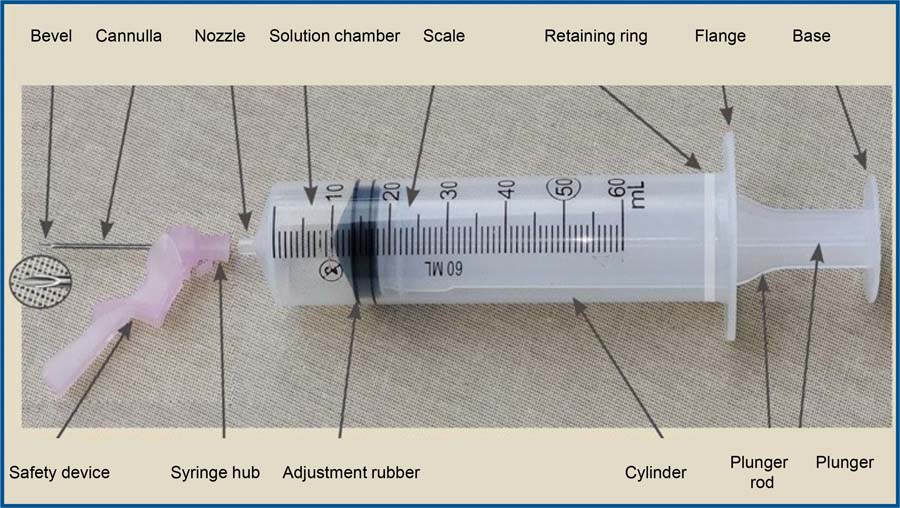
Figure 1 : Structures from the syringe and needle disposable hypodermic . Vitória, ES, Brazil, 2025. Source: Author.
The syringe barrel or body consists of a Luer or slip (pressure) nozzle, or Luer-lock (screw-on lock), molded in the central or lateral position, complemented by a flange (support fins) and a retaining ring (internal) at the upper end of the barrel. The graduation scale (caliber in ml or units) is printed on the side of the cylinder.
Hypodermic syringes and needles receive “non-visible” particles5,9 of surgical-grade “lubricant (silicone)”9 to facilitate the sliding of the plunger “(piston)”9 along the inner wall of the cylinder and, in the needle, reduce friction during puncture4. The retraction of the plunger inside the cylinder forms a space called the solution chamber, which is believed to protect the aspirated drug (figure 1).
The space formed between the internal part of the cylinder and the piston adjustment rubber is also known as the “syringe barrel”8, with the rubber being an obstacle to contamination and leaks of aspirated substances2,3,11.
The research included disposable hypodermic syringes, made of polypropylene, calibers 3ml, 5ml, 10ml and 20ml, and hypodermic needles caliber 25mm x 0.70dm (millimeter x decimeter of a millimeter), sterile, packaged in polyethylene blisters and surgical grade paper, manufactured nationally and internationally, distributed as follows: two (2) units of each caliber of the five (5) brands of the five (5) different lots. The syringes were divided according to the groups/lots, identified by letters of the Portuguese language (A,B,C,D,E).
To answer the guiding question, the research was divided into three stages:
First Stage: checking for leaks between the plunger adjustment rubber and the syringe solution chamber in the Basic Nursing Techniques Laboratory.
The forty (40) syringe samples were assembled with a hypodermic needle, followed by retraction of the plunger up to 2ml for calibers 3 and 5ml and 4ml for calibers 10 and 20ml. After arranging the syringes on wire racks, in a vertical position (nozzle and needle downwards), the space formed between the upper part of the adjustment rubber and plunger rods was filled up to the cylinder retaining ring, with colored distilled water.
To test the sealing of the syringe plunger adjustment rubber by gravitational drainage, all the needles were removed from the syringes, all of which were placed in a vertical position on wire shelves at room temperature for 72 hours, and every 6 hours subjected to a visual inspection test with the naked eye and an increase in the field of vision using a 100mm hand magnifying glass, corresponding to five times (5x) the degree of visual amplitude (figure 2).
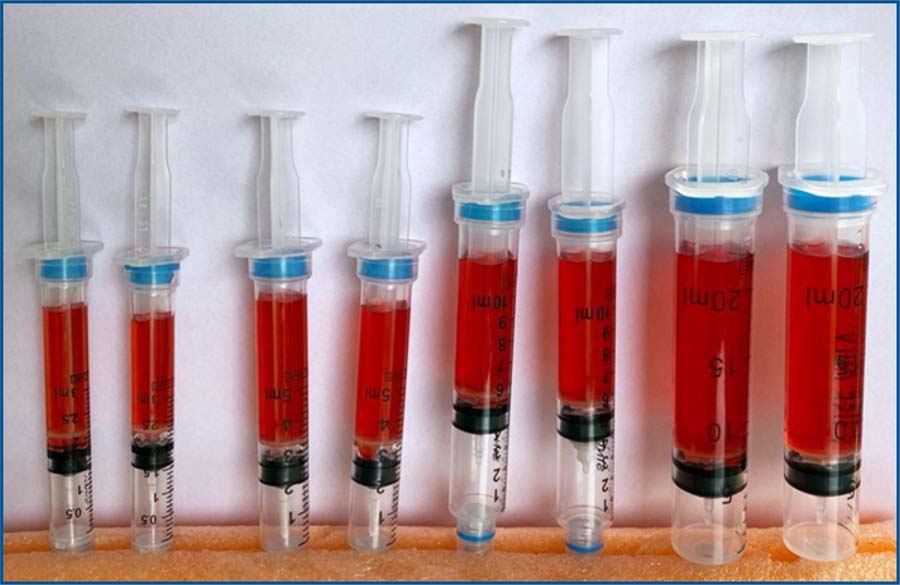
Figure 2 : Test of sealing from the rubber of adjustment of piston of syringes put drainage gravitational. Vitoria, ES, Brazil, 2025. Source: Elaborated for the author.
Second Stage: microbiological testing was carried out using a realistic simulation process, developed at the UFES Biology, Microorganisms and Antimicrobials Laboratory, supervised by a microbiologist.
The necessary materials were separated, organized, and labeled on a stainless steel tray on the laboratory preparation bench. Afterward, basic hand washing was performed, and the user was fitted with an N95 respirator mask, protective eyewear, and procedure gloves.
Drug aspiration was performed using technical and scientific standards by opening the sterile syringe and needle packaging in a petal shape, attaching the needle to the syringe, and moving the plunger for lubrication. The syringes were identified with a Portuguese letter as Control Group (C) and Experimental Group (E).
To disinfect the 0.9% Sodium Chloride (NaCl) solution, in a volume of 10ml, sterile hydrophilic cotton, soaked in 70º alcohol, was used, wrapped around the neck of the ampoule.
For the Control Group test, the following procedures were performed: using the 3ml syringe sample with a 25 x 0.70 gauge (mm x dm) needle, the needle protector was removed and placed inside the syringe packaging. The 0.9% NaCl vial was attached to the index and middle fingers, the syringe to the thumb and ring fingers of the non-dominant hand, and the needle cannula was inserted into the vial. Two ml were aspirated using the index, middle, and thumb fingers of the dominant hand, without touching the plunger rods. After aspiration, the needle was recapped, and the syringe was positioned vertically to remove air and change the needle.
The aspirated solution was taken to the Class II B2 Biological Safety Cabinet, kept on a wire shelf. This technical procedure was processed with syringes of calibers 3ml, 5ml, 10ml and 20ml twice (2) in all five (5) brands and five (5) different batches, totaling forty (40) samples.
For evaluation of the Experimental Group, the drug was aspirated, however, with the fingers touching the plunger rods, observing the following steps: with the 3ml syringe with a 25 x 0.70 gauge needle (mm x dm), the needle protector was removed and placed in the syringe packaging. The ampoule was fixed to the index and middle fingers, the syringe to the thumb and ring fingers of the non-dominant hand and 2ml of the 0.9% NaCl solution was aspirated with the index, middle fingers and thumb of the dominant hand, touching intensely along the entire length of the plunger rods.
After aspiration the needle was recapped and the syringe was positioned vertically to remove air and change the needle. The syringe was placed in a Class II B2 Biological Safety Cabinet and the administration was simulated.
Was completed , the same 3ml syringe was reused in a new drug preparation and aspiration procedure, keeping the fingers at the base of the plunger, aspirating 2ml of sterile Luria Bertani (LB) Culture Broth and sending it to the Class II B2 Biological Safety Cabinet to assess contamination of the syringe chamber.
The needle was recapped, air was removed from the syringe, and the sample was placed on a wire rack with the needle and nozzle facing downwards.
This procedure was carried out on 3ml, 5ml, 10ml and 20ml syringes in two (2) units, from five (5) brands and five (5) different batches, subjected to the same procedure until the aspiration stage of all forty samples (40) was completed.
All samples were placed in an incubator at 37°C for 72 hours. The first reading was taken after 24 hours, and the second after 72 hours, in the Biology, Microorganisms, and Antimicrobials Laboratory at UFES.
This method made it possible to verify whether the adjustment rubber of all tested samples remained aseptic during aspiration, acting as a barrier to contamination of the aspirated substances.
To assess the sterility of the syringes after aspiration of the drug, they were emptied and refilled with 2 ml of LB broth under aseptic conditions (in a Class II B2 Biological Safety Cabinet). Subsequently, the syringes containing the culture media were incubated in a bacteriological incubator at 37°C for 72 hours. They were visually inspected every 24 hours. The absence of turbidity indicated a negative result for bacterial contamination.
Third Stage : to guide this stage of the research, the following guiding question was developed: Is there leakage between the plunger and cylinder of disposable syringes under certain pressures?
Pressure Experiment I
At this stage, two (2) units of each sample were selected in calibers 3ml, 5ml, 10ml and 20ml, without needle, from the five (5) sterile brands and batches, packaging previously described, national and foreign manufacture, identified by letters of the Portuguese language, totaling 40 samples. The plunger was retracted to 2ml of air for samples from syringes for calibers 3 and 5ml, and 4ml for calibers 10 and 20ml.
To evaluate air leakage in this experiment, 2 ml of test water was added to the column above the adjustment rubber, between the plunger rods of the syringes for calibers 3 and 5ml and 4ml for calibers 10 and 20ml.
Afterwards, the syringe nozzle was adapted to the connecting tube of the Digital Pressure Measuring Device, the device pressure was zeroed, and pressure was exerted on the base of the plunger of the ten (10) samples tested in the 3ml caliber, simulating slow intramuscular application, average pressure of 1.0814 psi.
For 5ml caliber syringes, the average pressure exerted on the base of the plunger in the ten (10) samples was 1.1662 psi. In the 10ml caliber syringes, the average pressure exerted in the ten (10) was 1.2569 psi, while in the 20ml syringes, the average exerted in the ten (10) samples was 1.3634 psi, all compatible with the physical structure during drug infusion.
Pressure Experiment II
At this stage, the procedures were repeated under maximum equipment pressure (5.8 psi), corresponding to four times (4) greater than the average pressure exerted in the normal application of the drug via the intramuscular route.
Afterwards, the syringe nozzle was adapted to the connecting tube of the Digital Pressure Measuring Device to check if there was any air leakage in the cylinder (solution chamber) through the periphery of the piston and cylinder adjustment rubber, in a test water column, with a volume of 2ml for samples of calibers 3 and 5ml and 4ml for calibers 10 and 20ml.
RESULTS
Visual gravity leak test
After analysis for 72 hours, through visual reading with the naked eye and increasing the field of vision every 6 hours, no leaks were identified in the 40 syringes of the five (5) brands and batches submitted to the test.
Microbiological Test
In the microbiological test analysis, of the 60 samples of the five (5) brands and batches evaluated, with the test object being the touch of the fingers on the piston rods, no turbidity or colony growth in the aspirated culture medium was found.
We also observed that there was no turbidity of the incubated medium in 100% of the samples analyzed, confirming the integrity of the aspirated medium and the safety of the plunger adjustment rubber as a barrier to contamination.
Pressure Test
The 3ml syringe samples were tested under a mean pressure of 1.0814 psi for slow intramuscular infusion, and 1.1662 psi for 5ml calibers. For intravenous infusion, the mean pressure for 10ml samples was 1.2569 psi. For 20ml calibers, the mean pressure was 1.3634 psi.
The experiment showed that there was no air leakage between the internal periphery of the piston and cylinder, as assessed by the test water column, in the forty (40) samples tested, and there was no dissolved bubbles, proving the physical integrity of the syringe samples tested.
In the second experiment, forty (40) new samples were tested under an average pressure of 5.8 psi, in all selected calibers and brands. In this case, 2ml of water were used in the test column, in the samples for calibers of 3 and 5ml and 4ml for calibers of 10 and 20ml, and no leakage was observed with the naked eye between the piston adjustment rubber and the cylinder of the tested samples.
DISCUSSION
This research demonstrated that the manipulation of the plunger rods of the disposable syringe was not capable of causing contamination of the aspirated drug and that the rubber adjustment of the plunger of the tested syringes is a barrier against the penetration of liquids, microorganisms and air into the solution chamber.
Although the plunger’s rubber seal prevents liquids from entering the cylinder’s solution chamber glass syringes in the 1960s and 1970s did not offer this level of safety. Our research also demonstrated that, under certain pressures, the plunger’s rubber seal on disposable hypodermic syringes is undoubtedly the most important physical barrier, as demonstrated in the first experiment.
It is important to highlight that leaks between syringe plungers and cylinders occurred in our practice in the Intensive Care Unit when injecting 10ml of Vitamin Complex through venous access, adapted to the syringe to a three-way valve, where when infusing the medication it presented peripheral leaks (plunger and cylinder), with harm to the patient and the institution, reports the columnist.
The second experiment conducted in our research confirmed that occasional or habitual finger touching of the plunger rods does not introduce microorganisms into the solution chamber. The test was performed with sterile LB broth, and after intense finger sliding over the plunger rods, there was no turbidity or microbiological growth, corroborating other studies conducted in 2007 and 20192,4,12.
In the third experiment, pressure was applied to the base of the plunger in a test water column, filled above the rubber, between the plunger rods and cylinder, with air drawn into the solution chamber, demonstrating the real safety of the adjustment rubber that did not allow air to pass under pressure, five times higher than that exerted by the professional’s hand during drug infusion.
Our results are based on Charles’ Laws, which correlate temperature and pressure, while Gay-Lussac’s Law correlates temperature and volume, concluding that, by increasing the pressure on the piston, there will be an increase in the kinetic energy of the rubber molecules and, by increasing the temperature, there will be an increase in the volume of the rubber13. The two laws associated allowed us to conclude that, by pressing a mobile rubber structure, adjusted in a cylinder, it will expand, providing a seal.
FINAL CONSIDERATIONS
Using the three experimental methods, aiming to verify some technical-physical-structural event of tested syringes, we conclude:
That the microbiological test, respecting technical-scientific principles of preparation of drugs which do not interact with the LB Culture Broth, there was no turbidity and/or growth of colonies in the culture medium of the forty (40) samples analyzed, confirming negativity to the first experiment.
In controlling the pressure exerted on the base of the plunger by the technician’s hand in administering drugs, in a realistic simulation, in a techniques laboratory, with forty (40) syringes, in the aforementioned calibers, adapted to the Digital Pressure Measuring Device, with the pressure set to zero, we concluded that:
it was possible to confirm through this experiment on slow pressure on the plunger of the caliber syringes (3, 5, 10 and 20ml), by simulated infusion, intramuscularly and intravenously, in a Digital Pressure Measuring Device, the absence of leaks visible to the naked eye, on the periphery of the plunger and cylinder in a test water column, of the tested samples.
in the second moment, using syringes of the same caliber, under maximum pressure of the Digital Pressure Measuring Device (5.8 psi), exerted on the base of the plunger of the forty (40) samples, zeroing the pressure, adapting each syringe to the device connector in a test water column, absence of leaks visible to the naked eye.
occasional or habitual touching of fingers on the syringe plunger rods does not contaminate drugs aspirated inside the solution chamber.
the rubber adjusting cap of the plunger of the tested syringes constitutes a safe means of sealing against the penetration of liquids, microorganisms and air into the solution chamber, keeping the aspirated solution sterile, if good manufacturing practices and preparation techniques are observed.
disposable hypodermic syringes for aspiration and administration of drugs, constitute after experiments, a one hundred percent (100%) safe instrument, with the rubber adjusting the plunger being a fundamental part of its composition and physical safety.
physics has shown itself through the experiment using a Digital Pressure Measuring Device to be the fundamental and unprecedented methodology for measuring possible leaks and the probability of contamination of the solution chamber, confirming the complete safety of the rubber adjusting plunger of disposable syringes.
May this study prompt new experiments, aiming to demonstrate the safety of disposable hypodermic syringes in the preparation and administration of drugs.

